
Syncing Pole & Pump Prices with POS / IFSF
When the pole sign and the dispenser disagree, the customer trusts neither. Here is how forecourt price displays stay in lock-step with the till.
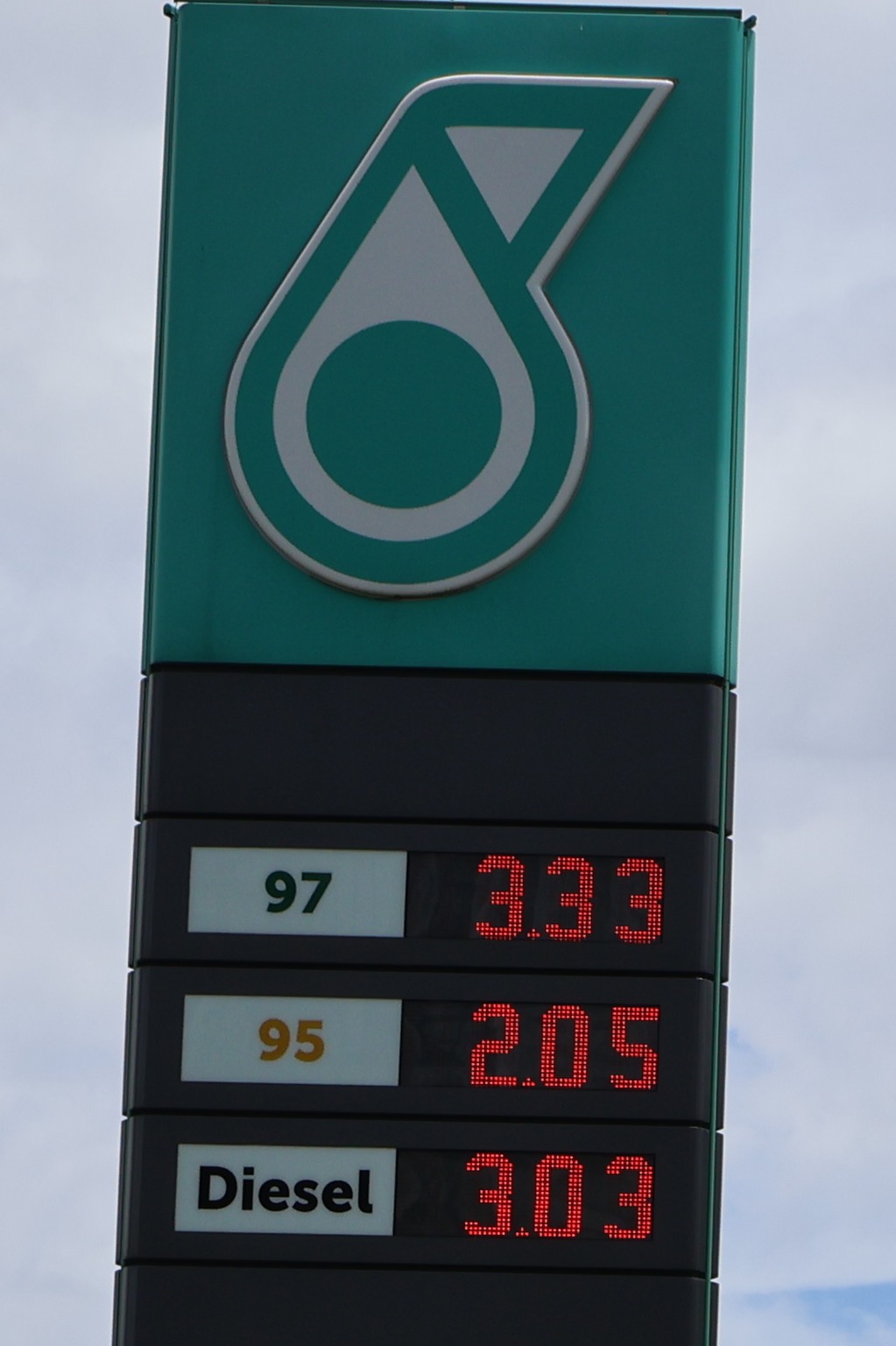
Every fuel retailer has seen it: the pole sign out on the road still shows yesterday's price, while the pump has already switched to today's. A motorist who committed to your forecourt because of the road-side number now pays a different rate at the nozzle. The result is a dispute at the kiosk, a Weights & Measures complaint risk, and a small but corrosive dent in trust. The root cause is almost always the same — the price displayed on the monolith and the price the pump charges are set by two separate systems that nobody keeps in sync.
That gap is entirely avoidable. The whole point of integrating an AVS Price Change Unit (PCU) with your point-of-sale and forecourt controller is to make the pole display a downstream consumer of the same price the pumps obey, so there is only ever one number to change and one place to change it.
Why a mismatch costs more than it looks
A pole-versus-pump discrepancy is rarely a one-off. The manual workflow that causes it — a staff member walking out to key new prices into a sign while a separate operator updates the POS — invites three recurring failures:
- Customer disputes. The advertised price is a representation; charging a different one at the pump triggers refunds, arguments and bad reviews.
- Compliance exposure. Displayed fuel prices are regulated. A stale pole sign is a measurable mismatch an inspector can document.
- Double-entry error. Keying the same price into two systems by hand means a typo on a busy morning becomes a live wrong price until someone notices.
Integration removes the second keystroke entirely. The price is entered once, in the system of record, and propagates outward.
Three control tiers — and where each fits
AVS supports three ways to drive a PCU, escalating in automation. The right tier depends on how many sites you run and how your prices are set.
| Control tier | Best for |
|---|---|
| 5-button remote (433 MHz) | A single forecourt where a manager updates prices by hand. Handheld remote, line-of-sight range up to 100 m, no wiring to the kiosk. |
| Price Sign Terminal (16-key LCD) | A site that wants prices set from inside the shop, and the option to bridge to the till. A wall unit replaces walking out to the sign. |
| Full POS / IFSF integration | Multi-pump sites and networks where prices must mirror the forecourt controller automatically and never be touched twice. |
The first tier suits an owner-operated station. The middle tier suits a busy single site that still sets its own prices. The third is where chains and brand-operated forecourts live, because it is the only tier that guarantees the pole can never drift away from the pump.
How POS / IFSF integration actually works
In an integrated forecourt the Price Sign Terminal is the bridge. It links to the forecourt controller or POS over a serial connection — RS232 stepping up to RS485 for the longer, multi-drop runs typical on a forecourt — and speaks IFSF, the international forecourt-standard protocol that fuel POS systems already use to talk to dispensers and controllers.
When the cashier or head office changes a grade price in the POS, the controller issues that price over IFSF. The terminal receives it and pushes the updated digits to the PCU on the monolith. That last hop to the sign is the same proven AVS link used on standalone units — wired, or wireless over the 433 MHz channel within a 100 m line-of-sight envelope. One PCU Controller can drive up to eight PCUs, so a multi-faced monolith updates as a single coordinated action rather than panel by panel.
What IFSF certification means for a buyer
IFSF (International Forecourt Standards Forum) is the industry protocol that lets forecourt equipment from different manufacturers — POS terminals, forecourt controllers and price signs — exchange data on a common standard, instead of each pairing needing its own custom integration. When evaluating any price-sign integration, it is worth asking the vendor for IFSF certification and conformance documentation as standard practice, regardless of which brand of controller or display is already on the forecourt.
AVS holds IFSF Price Pole certification for the AVS Price Pole; certificate reference available on request. That certification sits alongside CE/EMC, FCC Part 15 and RoHS compliance on the hardware. AVS PCUs are installed on Petronas, Shell, Petron and Vivo forecourts among others, with each integration scoped against the specific POS and controller already running at that site.
The payoff: one source of truth
Once the pole is a consumer of the POS price, three things change for the better:
- A single source of truth. The price lives in the POS. The sign cannot disagree because it is no longer set independently.
- Instant, network-wide updates. Head office changes a grade once and every connected site's pole moves with it — no per-station walk-arounds.
- Fewer errors, fewer disputes. No second keystroke means no second typo, and the customer pays exactly the price they were shown on the road.
For a single owner-operator the remote may be all you ever need. But the moment you are running multiple grades across multiple pumps — and certainly across multiple sites — the case for syncing the pole to the POS over IFSF stops being a convenience and becomes the cheapest insurance you can buy against disputes and compliance findings.
See the technical detail on our POS / IFSF integration page, the controller hardware on the PCU controllers page, and the full certificate list under certifications.
Make the pole and the pump agree — automatically
Tell us your POS and forecourt controller, and we'll scope an IFSF-integrated PCU that keeps every price in sync.